
The Amazing Carrot: History, Nutrition, and Vision Myths
The Amazing Carrot: History, Nutrition, and Vision Myths Debunked
The Wonderful World of Carrots: A Versatile Root Vegetable
Let's give a round of applause for the wonderfully versatile carrot! This sweet, healthy, and everyday vegetable truly has it all. It boasts a great flavor, a fantastic vibrant color, and if you're inclined to believe the old tales, it's even said to help you see better in the dark. Carrots are a staple in kitchens worldwide, appreciated for their accessibility and the delightful crunch they add to meals. Their bright orange hue is instantly recognizable, making them a go-to ingredient for home cooks and professional chefs alike.
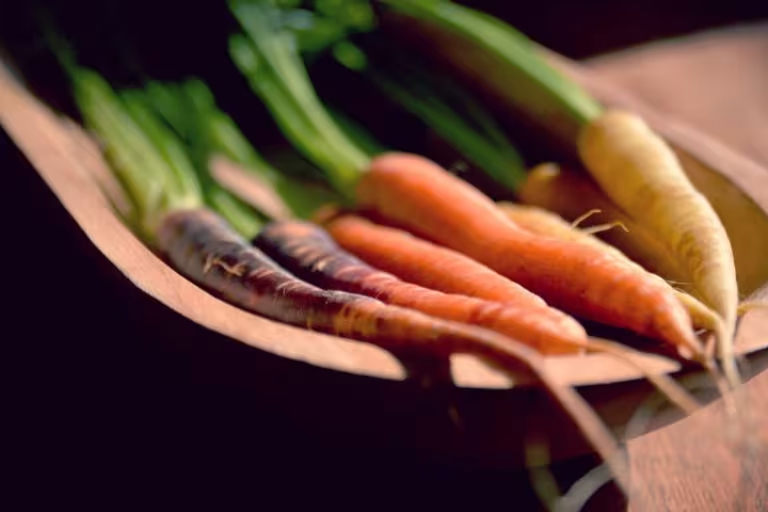
Who doesn't enjoy cooking with this incredibly adaptable root vegetable? We love to roast them until tender and caramelized, bringing out their natural sweetness. They can be boiled to perfection for a simple, wholesome side dish, blended into smooth, comforting soups that warm you from the inside out, and grated finely into fresh, crisp salads for added texture and flavor. The humble carrot stands out as one of our top vegetable choices, and its cultivation dates back thousands of years. Interestingly, in earlier times, you were much more likely to discover carrots in shades of purple, red, yellow, or white, rather than the familiar orange hue that dominates our plates today. These older varieties offered a spectrum of flavors and colors, showcasing the plant's diverse genetic heritage and providing a visual feast before they even hit the pot.
The Rise of the Orange Carrot: A Historical Shift
So, what led to the orange carrot becoming the preferred variety? It was the Dutch people during the 17th century who played a significant role in cultivating and popularizing the orange variety. This preference was likely driven by its striking, brilliant color and its notably higher levels of beta-carotene, a compound that gives carrots their characteristic orange shade and is converted to vitamin A in the body. Furthermore, historical accounts suggest that these orange carrots may have been cultivated as a patriotic tribute to William of Orange, a key leader in the Dutch struggle for independence during that era. This historical connection cemented the orange carrot's place in culinary history and its widespread adoption.
Regardless of the precise reason, the orange variety has certainly endured and become globally recognized. However, keep an eye out for the fascinating 'heritage' varieties that often appear at farmers' markets and specialty grocers. Their beautiful mix of purple, yellow, orange, and white hues is not only visually appealing but also makes for especially attractive and delicious side dishes when cooked. Exploring these heritage carrots can add a unique dimension to your meals and a touch of history to your plate, offering a delightful departure from the everyday.
Nutritional Powerhouse: What Carrots Offer
Carrots are exceptionally rich in beta-carotene, a powerful antioxidant that your body skillfully converts into vitamin A. It can often be challenging to determine whether cooking vegetables enhances or diminishes their nutritional content, and there isn't a universal rule that applies to all produce. However, in the case of carrots, their nutritional benefits are actually amplified by consuming them cooked. Cooking helps break down the cell walls of the carrot, making the beta-carotene more accessible for your body to absorb. In fact, a modest serving of just 100 grams of carrots can provide well over your entire daily recommended value of vitamin A, supporting everything from vision to immune function and skin health. Vitamin A is essential for cell growth and differentiation, playing a role in many bodily processes.
Selecting and Preparing Carrots for Optimal Flavor
Young carrots, harvested when they are still small and tender, possess a particularly sweet and delicate flavor, making them absolutely delightful to eat raw or lightly cooked. When preparing these young carrots, you can often skip the peeling step altogether, as their skins are thin and tender. Simply give them a thorough wash under cool water, and they are ready to be steamed for just a few minutes until perfectly tender-crisp. For larger, mature carrots, peeling is generally recommended to remove any potential bitterness or tough outer layers. To ensure you're getting the best taste and texture, carrots are always most delicious when they are fresh. Therefore, when purchasing them, make sure they feel firm to the touch and display a bright, vibrant color, indicating they are full of flavor and moisture. Avoid carrots that are limp or have soft spots, as these are signs of age and reduced quality.
Debunking the Night Vision Myth
Now, let's address that persistent old tale about carrots helping you see better in the dark. Of course, this is largely a myth, though it has a kernel of truth. During the challenging times of World War II, the UK Ministry of Food actively promoted carrots as a super-healthy vegetable that would supposedly improve citizens' ability to see during nighttime blackouts. This campaign was also cleverly used to explain the remarkable success of UK fighter pilots during their night missions, attributing their skill to a diet rich in carrots. While the story is an engaging piece of wartime propaganda, the only genuine connection between carrots and eyesight lies in the fact that vitamin A, which carrots are rich in, does indeed play a vital role in maintaining healthy vision. It's essential for the proper functioning of the eyes, particularly in low-light conditions, but it won't grant you superhuman night vision or cure existing vision problems. Consuming adequate vitamin A is important for preventing conditions like night blindness, but it won't enhance vision beyond normal capabilities.
In summary, we've explored the rich history and significant nutritional benefits of the humble carrot. We discovered how the familiar orange carrot gained prominence in the 17th century, largely due to Dutch cultivation efforts and possibly as a patriotic tribute to William of Orange. We highlighted that carrots are packed with beta-carotene, a precursor to vitamin A, which is crucial for maintaining good vision and whose nutritional benefits are actually enhanced by cooking due to better absorption. While the popular myth about carrots dramatically improving night vision is untrue, we confirmed that vitamin A is indeed essential for overall eye health. We encourage you to seek out those unique heritage carrot varieties for their distinct appeal and flavor, and to enjoy the incredible versatility of this remarkable root vegetable in your cooking, from simple snacks to elaborate dishes.