
Supermarket Psychology Hacks 2026: Outsmart Grocery Traps
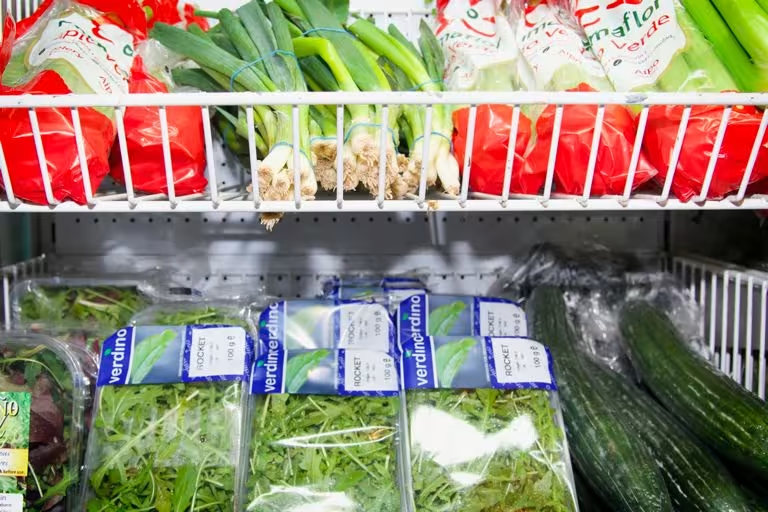
It might not come as a shock, but your local supermarket is a carefully orchestrated environment, brimming with marketing tactics designed to boost profits and encourage shoppers to spend more than they initially planned. While some of these strategies are standard retail practices aimed at increasing sales, others are far more subtle and may go unnoticed.
With consumer awareness growing, fueled by articles and documentaries highlighting these practices, retailers find it increasingly difficult to rely on the more obvious ploys. We're becoming more discerning shoppers, and fewer tricks likely slip past us. Nevertheless, here are a few retail strategies to keep in mind during your weekly grocery run.
Strategic Placement of Essentials
The layout of a supermarket might feel intuitive after a few visits, but for a first-time shopper, finding basic necessities can be a challenge. Some stores strategically place high-demand items like milk, bread, or eggs in the farthest corners of the store. The intention is to guide new customers through as many aisles as possible, increasing the likelihood they'll pick up additional, unplanned items along the way.
While this can sometimes serve as a helpful reminder for forgotten items, it makes sticking to a strict budget difficult. Supermarkets understand this dynamic and use it to direct buyer attention where store planners want it.
Our tip: Before you leave home, create a detailed shopping list of everything you need. Commit to sticking to this list during your shop. You might be surprised at the cumulative savings over time.
Deceptive Multi-Buy Offers
Offers like 'Buy One, Get One Free,' 'Two for £2,' and 'Meal Deals' often appear to be fantastic bargains. However, in some instances, these are 'loss leaders' – products sold at a minimal profit or even a loss to entice you into the store and encourage the purchase of other, more profitable items. In other cases, multi-buy discounts or special pack sizes might seem appealing until you perform a like-for-like price comparison with similar brands or even different pack sizes of the same brand. These deals can sometimes lead to paying less, but it might be for something you don't truly need, and in some scenarios, you could end up paying more per unit than you would otherwise.
Remember, supermarkets know that shoppers are often in a hurry and may not have the time to scrutinize every detail.
Our tip: Resist the urge to be rushed. Take a moment to read the fine print. While the large, bold print grabs your attention, the smaller text often reveals the price per 100 grams, per ounce, or per liter. You'll frequently discover that the headline deals are actually more expensive than purchasing a different package type or size of the same product.
Understanding Consumer Behavior in Store
The most budget-friendly products in a supermarket are typically located on the bottom shelves, requiring you to bend down to reach them, and their price tags may not be easily visible. Most shoppers tend to gravitate towards the middle shelves because they are more accessible and quicker to browse. These middle shelves are precisely where the highest-margin items are stocked – the products the supermarkets most want you to purchase.
Every aspect of the store environment – from the layout and background music to the color schemes and product arrangements – is meticulously designed based on principles studied by behavioral scientists who understand decision-making. Therefore, while a smart shopper can certainly find great deals, it requires a conscious effort to be aware of the subtle encouragements guiding your choices as you move through the store.